Privacy Policy for http://performanceauditing.blogspot.com/
If you require any more information or have any questions about our privacy policy, please feel free to contact us by email at n4n1k84@gmail.com.
At http://performanceauditing.blogspot.com/, the privacy of our visitors is of extreme importance to us. This privacy policy document outlines the types of personal information is received and collected by http://performanceauditing.blogspot.com/ and how it is used.
Log Files
Like many other Web sites, http://performanceauditing.blogspot.com/ makes use of log files. The information inside the log files includes internet protocol ( IP ) addresses, type of browser, Internet Service Provider ( ISP ), date/time stamp, referring/exit pages, and number of clicks to analyze trends, administer the site, track user’s movement around the site, and gather demographic information. IP addresses, and other such information are not linked to any information that is personally identifiable.
Cookies and Web Beacons
http://performanceauditing.blogspot.com/ does use cookies to store information about visitors preferences, record user-specific information on which pages the user access or visit, customize Web page content based on visitors browser type or other information that the visitor sends via their browser.
DoubleClick DART Cookie
.:: Google, as a third party vendor, uses cookies to serve ads on http://performanceauditing.blogspot.com/.
.:: Google's use of the DART cookie enables it to serve ads to users based on their visit to http://performanceauditing.blogspot.com/ and other sites on the Internet.
.:: Users may opt out of the use of the DART cookie by visiting the Google ad and content network privacy policy at the following URL - http://www.google.com/privacy_ads.html
Some of our advertising partners may use cookies and web beacons on our site. Our advertising partners include ....
Google Adsense
These third-party ad servers or ad networks use technology to the advertisements and links that appear on http://performanceauditing.blogspot.com/ send directly to your browsers. They automatically receive your IP address when this occurs. Other technologies ( such as cookies, JavaScript, or Web Beacons ) may also be used by the third-party ad networks to measure the effectiveness of their advertisements and / or to personalize the advertising content that you see.
http://performanceauditing.blogspot.com/ has no access to or control over these cookies that are used by third-party advertisers.
You should consult the respective privacy policies of these third-party ad servers for more detailed information on their practices as well as for instructions about how to opt-out of certain practices. http://performanceauditing.blogspot.com/'s privacy policy does not apply to, and we cannot control the activities of, such other advertisers or web sites.
Saturday, July 23, 2011

Accounting Basics: Current Assets - Accounts Receivable


Almost as common a term as cash nowadays, accounts receivable is an accounting term meaning amounts owed to a business by other business or customers (individuals or otherwise). An accounts receivable arises anytime when goods are sold but cash is not received immediately; thus when you purchase something for cash at Walmart you are not creating an accounts receivable. If you commit to purchase something (say a lawnmower) and you are offered the option to pay next month, now you have created an accounts receivable on the retailers books.
Unlike a note receivable (to be discussed next), there is generally no signed agreement beyond an invoice for an accounts receivable. They are generally short term in nature (less than a year, if not only a couple months). Because of their short term nature, they are generally listed as a current asset on the balance sheet next after cash.


We've previously discussed what Assets are. In an unclassified balance sheet where you only have 3 major classifiations (assets, liabilities and owners equity) that would be in the story. A much more useful report is the Classified Balance Sheet. Here, the three major categories are subdivided to provide readers of the financial statements with much more detailed information. The first such subdivision under assets is Current Assets.
Current Assets are defined as those assets which will either be converted into cash or otherwise 'used up' by the business in a relatively short period of time (generally one year or less). On the balance sheet, they are generally presented in order of liquidity; thus cash is generally listed first.
Other examples of current assets include accounts receivable, notes receivable (which often have a current and a non-current portion) and prepaid expenses. These will be examined in future entries.
Product Pricing Issues and Strategies


Another good article on BNET (can you tell I like this website). A lot of it is common sense. The helpful thing about the BNET website is how they present the article. It has a very good layout which highlights the main points. This particular article talks about issues and strategies regarding product pricing.
Product Pricing Issues and Strategies
Another good article on BNET (can you tell I like this website). A lot of it is common sense. The helpful thing about the BNET website is how they present the article. It has a very good layout which highlights the main points. This particular article talks about issues and strategies regarding product pricing.
Microsoft Coffee Table PC
Is there really a market for this thing; I can't imagine having such an intrusive thing in my living room...
Microsoft to unveil 30-inch touch screen computer - May. 30, 2007
Microsoft unveils coffee table 'surface computer'
Software maker will introduce a coffee-table-shaped computer that has a 30-inch display, allowing people to touch and move objects on the screen.
May 30 2007: 2:42 PM EDT
SEATTLE (Reuters) -- Microsoft Corp. will unveil a coffee-table-shaped "surface computer" Wednesday in a major step towards co-founder Bill Gates's view of a future where the mouse and keyboard are replaced by more natural interaction using voice, pen and touch.
Microsoft Surface, which has a 30-inch display under a hard-plastic tabletop, allows people to touch and move objects on screen for everything from digital finger painting and jigsaw puzzles to ordering off a virtual menu in a restaurant.
surface.03.jpg
Microsoft's coffee-table-shaped "surface computer" hopes to one day replace the mouse and keyboard with voice recognition, pen and touch.
It also recognizes and interacts with devices placed on its surface, so cell phone users can easily buy ringtones or change payment plans by placing their handsets on in-store displays, or a group of people gathered round the table can check out the photos on a digital camera placed on top.
Microsoft (Charts, Fortune 500), the world's largest software maker, said it will manufacture the machine itself and sell it initially to corporate customers, deploying the first units in November in Sheraton hotels, Harrah's casinos, T-Mobile stores, and restaurants.
Microsoft's 150-lb computer: What's the point?
Microsoft to unveil 30-inch touch screen computer - May. 30, 2007
Microsoft unveils coffee table 'surface computer'
Software maker will introduce a coffee-table-shaped computer that has a 30-inch display, allowing people to touch and move objects on the screen.
May 30 2007: 2:42 PM EDT
SEATTLE (Reuters) -- Microsoft Corp. will unveil a coffee-table-shaped "surface computer" Wednesday in a major step towards co-founder Bill Gates's view of a future where the mouse and keyboard are replaced by more natural interaction using voice, pen and touch.
Microsoft Surface, which has a 30-inch display under a hard-plastic tabletop, allows people to touch and move objects on screen for everything from digital finger painting and jigsaw puzzles to ordering off a virtual menu in a restaurant.
surface.03.jpg
Microsoft's coffee-table-shaped "surface computer" hopes to one day replace the mouse and keyboard with voice recognition, pen and touch.
It also recognizes and interacts with devices placed on its surface, so cell phone users can easily buy ringtones or change payment plans by placing their handsets on in-store displays, or a group of people gathered round the table can check out the photos on a digital camera placed on top.
Microsoft (Charts, Fortune 500), the world's largest software maker, said it will manufacture the machine itself and sell it initially to corporate customers, deploying the first units in November in Sheraton hotels, Harrah's casinos, T-Mobile stores, and restaurants.
Microsoft's 150-lb computer: What's the point?
Accounting Basics: The Balance Sheet


One of the fundamental components (for want of a better word) of accounting is the Balance Sheet. The balance sheet is often referred to as a statement of financial position. It can be described as a snapshot that shows the company's financial position at any given moment. Listed in the balance sheet are the company's assets, liabilities and owners equity.
If you view the balance sheet as a two column worksheet, the assets would be in the left column while the liabilities and owners equity would be in the right column. The two columns must be equal.
You won't be able to determine the company's profitability from the balance sheet. What the balance sheet will show is the solvency of the company. Analysts will look at various ratios (i.e. current ratio: current assets / current liabilities) to determine the company's financial well being.
Future entries in my Accounting Basics series will describe each of the components of the balance sheet.
Accounting principle- Accrual Basis
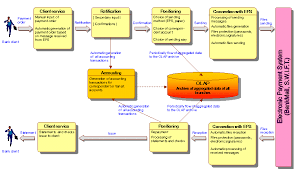
Figures generated / kept in accordance to accounting principle is prepared on accrual basis. For instance, accountant record the provision for warranty ( based on estimate) even though there's no actual cash/ economic outflow yet.In finance, cash basis figures are more relatively more valuable , as compared to accrual basis ( advocated by accounting principle), in order to value a business.What do you think ? You prefer a an accrual method or cash method in valuing a business?
Accounting Basics: Assets

As hinted in my previous entry, the balance sheet is comprised of three basic sections: assets, liabilities and owners equity. Assets are resources or items of value owned by the business. They are items of value which can be used or exchanged in the production or delivery of services of the business.
Typically, the most common asset people think of is cash. Cash can be exchanged to purchase office supplies, raw materials used in production, pay employees, etc.; thus it is an asset of the business. Machinery is another asset; it is used in the production of the goods or services delivered by the business.
Substantial effort is made by accountants in valuing assets; some of which may not have a clear current value. For example, a piece of equipment purchased five years ago for $100,000 and used daily in the operation of the business is not worth $100,000 today (in the same way that a five year old car is not worth the price paid for it when it was new). In this instance, accountants use depreciation to adjust the value of a 'fixed asset' such as this (to be discussed later).
Subscribe to:
Posts (Atom)